Accidental blood stains on upholstery can be difficult to remove, especially if they are left untreated for too long. To get blood stains out of upholstery, blot the stain immediately with cold water, use an appropriate upholstery safe cleaning solution, and avoid heat, which can permanently set the stain. Acting quickly often makes the difference between complete stain removal and a lasting mark.
Whether the stain comes from a minor injury, a pet accident, or another household mishap, understanding the proper cleaning method can help protect your furniture while improving your chances of removing the stain completely.
Understanding Why Blood Stains Upholstery
Blood stains set quickly because of the proteins in hemoglobin, which bond with fabric fibers as they dry. Warm temperatures can accelerate this process, making the stain more difficult to remove. Using the correct cleaning method based on the upholstery fabric type is essential to avoid discoloration or fabric damage.
Before starting any cleaning process, checking the upholstery tag for cleaning codes ensures the safest method for the fabric:
- W, Water based cleaners can be used.
- S, Solvent based cleaners are recommended.
- WS, Both water- and solvent based cleaners are safe.
- X, Professional cleaning only; avoid water or solvents.
Why Blood Stains Are Difficult to Remove
Blood is different from many common household stains because it contains proteins that quickly bond to fabric fibers. As blood dries, these proteins harden and become more difficult to break apart. This is why a fresh blood stain is usually much easier to remove than one that has been sitting for several hours or days.
The type of upholstery also affects how deeply a stain penetrates. Synthetic fabrics often resist stains better than natural fibers, while materials such as cotton, linen, and velvet can absorb blood more quickly. Understanding these factors helps homeowners choose the most effective cleaning approach and avoid treatments that could worsen the stain.
Removing Fresh Blood Stains
When dealing with fresh blood, acting quickly prevents the stain from setting. Blotting the stain with a clean, cold, damp cloth lifts excess blood without spreading it further. Cold water is essential because warm or hot water can cause the stain to set.
A mild dish soap mixed with cold water is often effective for breaking down fresh stains. Dabbing the area gently and blotting with a dry cloth helps remove the stain without damaging the upholstery. For fabric upholstery, white vinegar diluted with water can act as a natural stain remover. After cleaning, allowing the area to air dry prevents moisture buildup in the fabric.
Cleaning Blood Stains from Different Upholstery Fabrics
Different upholstery materials respond differently to cleaning products and techniques. Before applying any stain remover, it is important to understand the type of fabric being treated. Microfiber upholstery generally responds well to gentle cleaning solutions and careful blotting. Because microfiber is tightly woven, stains often remain closer to the surface if addressed quickly.
Cotton upholstery tends to absorb liquids more readily, making prompt treatment especially important. Delayed cleaning may allow blood to penetrate deeper into the fabric fibers. Velvet upholstery requires extra caution. Excess moisture or aggressive scrubbing can flatten the fabric pile and affect its appearance. When cleaning velvet, use minimal moisture and gentle blotting motions. Leather furniture should never be saturated with water. Instead, use a leather safe cleaner and follow up with a leather conditioner to prevent drying or cracking.
Removing Dried Blood Stains
If blood has already dried, loosening the stain before cleaning helps improve results. Using a soft brush or vacuum with an upholstery attachment can lift some dried residue before applying a cleaning solution. A mixture of hydrogen peroxide and cold water is effective for breaking down dried blood stains. Applying a small amount to the affected area and blotting with a clean cloth lifts the stain without soaking the fabric. For delicate upholstery, a baking soda and water paste can provide a gentler solution. Allowing the paste to sit for 15 minutes before dabbing it away ensures that the fabric is not damaged.
Enzyme based cleaners, commonly used for pet stains, work well for removing dried blood by breaking down organic matter. Testing any cleaner on a hidden section of the upholstery prevents unwanted discoloration before applying it to the stain.
Common Mistakes to Avoid When Removing Blood Stains
One of the biggest mistakes homeowners make is using hot water. Heat causes blood proteins to bond more tightly with fabric fibers, making stains significantly harder to remove. Always use cold water when treating blood stains. Another common mistake is scrubbing aggressively. Excessive scrubbing can spread the stain deeper into upholstery fibers and may damage delicate fabrics. Blotting and gentle dabbing are usually more effective than forceful rubbing. It’s also important to avoid mixing cleaning products. Combining household cleaners can damage upholstery and may create harmful fumes. Always follow product instructions and test cleaning solutions in an inconspicuous area before treating visible stains.
When Professional Upholstery Cleaning Is the Better Option
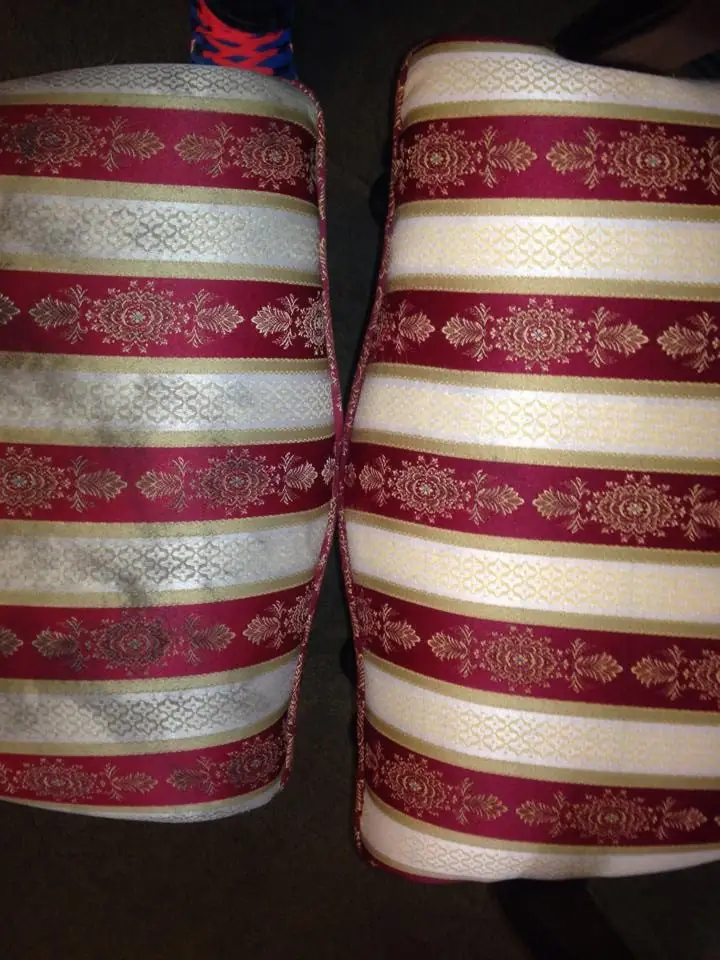
Some blood stains penetrate deeply into upholstery cushions and padding, making them difficult to remove with household products alone. Older stains, large spills, and stains on delicate fabrics often require specialized cleaning techniques. Professional upholstery cleaning uses commercial grade extraction equipment and fabric safe cleaning solutions that can reach contaminants below the surface. In many cases, professional treatment can remove stains that appear permanent while helping preserve the appearance and lifespan of the furniture.
Preventing Blood Stains on Upholstery
To protect upholstery from stains, using washable slipcovers or furniture protectors helps reduce direct exposure. Keeping a small first aid kit with bandages nearby prevents minor cuts from leaving blood stains on furniture. Regular upholstery maintenance, including professional upholstery cleaning, ensures that deep set stains and allergens are removed, keeping fabric in top condition.
Why Prompt Cleanup Matters
Blood stains are not only a cosmetic concern. Organic materials left in upholstery can attract bacteria and contribute to unpleasant odors over time. Prompt cleanup helps maintain a cleaner indoor environment and reduces the likelihood of long term staining. Regular upholstery maintenance and professional cleaning can also help remove dust, allergens, and other contaminants that accumulate in furniture fabrics, supporting healthier indoor air quality throughout the home.
How to Keep Upholstery Looking Its Best Long Term
Preventing stains is often easier than removing them. Regular vacuuming helps remove dust, dirt, and debris before they become embedded in upholstery fibers. Rotating cushions and maintaining a consistent cleaning schedule also help distribute wear more evenly. Furniture protectors, washable throws, and upholstery safe fabric protectants can provide an additional layer of defense against spills and accidents. Homes with children and pets may especially benefit from these preventative measures.
Scheduling professional upholstery cleaning every 12 to 24 months can help remove deep seated contaminants that routine maintenance cannot reach. This not only improves the appearance of furniture but can also extend its lifespan and maintain a cleaner indoor environment.
Conclusion
Learning how to get blood stains out of upholstery starts with acting quickly and using the right cleaning techniques. Cold water, gentle stain removal methods, and upholstery safe cleaning products can often eliminate stains before they become permanent. While many fresh stains can be treated successfully at home, older or deeply embedded stains may require professional attention. Green & Clean Home Services provides upholstery cleaning services throughout Northeast Ohio, helping homeowners restore furniture, remove stubborn stains, and maintain cleaner, healthier living spaces.