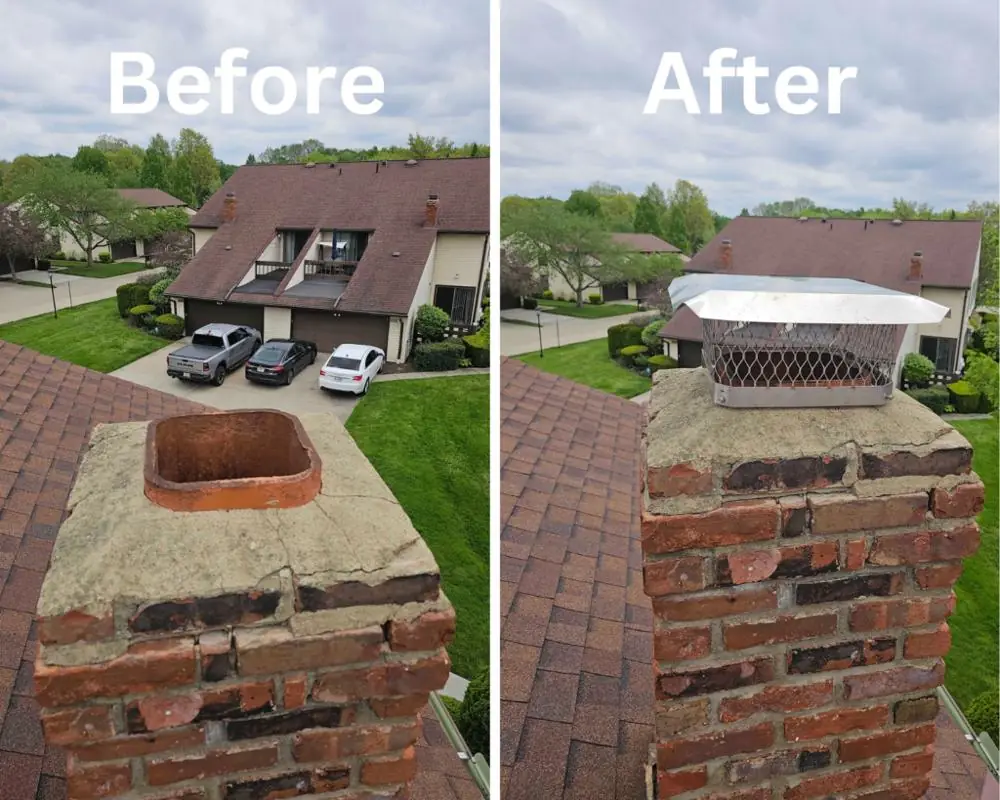
Chimney bricks are built to endure high heat, smoke, and soot, but even the most durable materials show wear when left uncleaned for too long. To clean chimney brick, remove loose soot and debris with a stiff bristle brush, apply a brick safe cleaning solution, scrub the surface thoroughly, and rinse or wipe away residue while avoiding excessive moisture. The exact cleaning method depends on whether you’re removing interior soot, creosote buildup, or exterior staining.
Whether you rely on your fireplace regularly or only fire it up during the Northeast Ohio winters, soot stained bricks can dull your home’s charm and invite long term damage. Learning how to clean chimney brick effectively is the key to maintaining both the beauty and safety of your fireplace or chimney structure.
Why Chimney Brick Gets So Dirty
Chimney bricks are constantly exposed to the byproducts of combustion. Every time you light a fire, smoke travels up the flue and deposits a layer of creosote and soot. These residues are sticky, flammable, and notoriously difficult to remove. Over time, this accumulation seeps into the porous brick, staining the surface and compromising its structural integrity.
Outside the home, bricks are exposed to wind, rain, moss, and pollution, which can all leave marks or encourage mold growth. When cleaning is neglected, chimney bricks can crack or deteriorate faster, particularly in the freezing and thawing cycles so common in Northeast Ohio.
Safety Comes First
Before diving into the cleaning process, it’s critical to prioritize safety. Working with chimney brick means dealing with stubborn substances and, in some cases, working at heights or in enclosed spaces. Protective gloves, safety goggles, and a high quality dust mask are essential. For interior chimneys, make sure the fireplace is cool and has not been used for at least 24 hours. If you’re cleaning an exterior chimney, use a stable ladder or scaffolding if needed, and never attempt roof access without proper equipment and assistance.
Understanding the Type of Brick and Stain
Not all bricks are made alike. Some are highly porous and absorb cleaning solutions rapidly, while others are more resistant to moisture. The age of the chimney brick also affects how it reacts to cleaning products; older bricks are often more fragile and may require gentler techniques.
Soot stains tend to be dry and powdery, while creosote buildup is sticky and tar like. Efflorescence, white stains caused by mineral deposits, often appears on exterior bricks. Identifying the type of stain helps determine the most effective method of removal.
Preparing the Cleaning Area
For indoor cleaning, begin by covering surrounding surfaces with drop cloths or plastic sheeting. Ash and soot are incredibly difficult to remove from rugs and upholstery, so take the extra time to tape coverings securely in place. Remove fireplace tools, grates, or wood storage accessories from the area.
If your brick is painted or sealed, proceed with caution. Paint may peel or react to strong chemical solutions, and sealants can make cleaning products less effective. A spot test on an inconspicuous area is a wise precaution.
Cleaning Interior Chimney Brick
Start with dry brushing using a stiff bristled brush to loosen soot and debris. Use short, strong strokes and work from top to bottom to prevent re soiling cleaned areas. Avoid wire brushes, which can scratch or gouge soft brick.
For deeper cleaning, mix a mild solution of dish soap and warm water. Apply it to the brick with a sponge or scrub brush and allow it to sit for 10 to 15 minutes. This loosens residue before scrubbing. Rinse the area with a clean sponge and warm water, being careful not to oversaturate the brick.
In cases of heavy buildup, a vinegar and water solution or a specially formulated masonry cleaner may be necessary. Products containing trisodium phosphate (TSP) are effective but should be used sparingly and with protective gear, as they can irritate skin and eyes. The Environmental Working Group (EWG) offers safety ratings for household chemicals if you’re unsure about a product.
Cleaning Exterior Chimney Brick
Cleaning an outdoor chimney brick presents different challenges. Mold, moss, bird droppings, and pollution can all affect appearance and surface strength. Begin with a gentle hose down to remove loose debris, but avoid power washing unless you’re confident the brick is in excellent condition; high pressure water can damage weakened mortar.
Use a masonry cleaner designed for exterior use. Apply it using a spray bottle or garden sprayer, then scrub with a long handled brush. Let the solution sit according to product instructions, then rinse thoroughly with low pressure water. Always clean in mild weather conditions to avoid rapid evaporation or runoff that can damage nearby landscaping.
If mold or algae is present, a diluted bleach solution (1 part bleach to 10 parts water) can help kill the growth. However, protect surrounding plants and wear full protective gear to prevent irritation. Refer to CDC mold safety guidelines for best practices when working with biological contaminants.
Want a certified technician to look at yours? Estimates are free across Northeast Ohio. Request yours here or call (216) 446-2626.
Dealing with Persistent Stains
Some chimney brick stains are too stubborn for household solutions. Rust stains, decades old creosote, or chemical discoloration may require professional cleaning techniques such as poultice applications or acid based cleaners. These should only be attempted by experienced individuals or chimney specialists.
In some cases, professional restoration is the better investment. Brick replacement or repointing (renewing the mortar) might be necessary to restore the structural and visual integrity of the chimney.
Ongoing Maintenance for Brick Longevity
To keep chimney bricks clean long term, consider applying a breathable masonry sealer after cleaning. This will help repel moisture and protect against future staining. Avoid non breathable sealants, which can trap water and worsen freeze thaw damage in colder climates.
Establishing a seasonal chimney inspection routine also supports brick health. The Chimney Safety Institute of America (CSIA) recommends annual inspections to catch issues like cracks, soot buildup, and structural wear early. Green and Clean Home Services offers full chimney maintenance for homeowners in Lake, Cuyahoga, Geauga, Summit, Portage, and Medina counties.
Preventing Future Chimney Brick Staining
Keeping chimney brick clean is often easier than removing years of accumulated soot and residue. Regular chimney maintenance helps reduce the amount of creosote, smoke deposits, and moisture that come into contact with brick surfaces.
Burning properly seasoned firewood can significantly reduce soot production compared to burning wet or unseasoned wood. Scheduling annual chimney inspections and routine chimney sweeping also helps prevent excessive buildup that can stain masonry and create fire hazards.
Homeowners should also monitor gutters, roof flashing, and nearby trees. Water intrusion is one of the leading causes of masonry deterioration and can accelerate staining, cracking, and mortar damage. Addressing moisture problems early helps preserve both the appearance and structural integrity of chimney brick.
Signs Your Chimney Brick May Need More Than Cleaning
Not every chimney problem can be solved with a cleaning solution and a scrub brush. Some signs indicate that the chimney may require repairs or restoration in addition to cleaning.
Watch for crumbling mortar joints, loose bricks, recurring white efflorescence, visible cracks, water stains, or strong smoke odors that persist even when the fireplace is not in use. These issues often point to underlying moisture intrusion or structural deterioration.
Cleaning may improve the appearance of the chimney, but it will not correct damaged masonry or water related problems. Identifying these warning signs early can help homeowners avoid more extensive and costly repairs in the future.
When to Call a Professional
If you’re dealing with widespread staining, deterioration, or structural concerns, don’t attempt to resolve them yourself. A certified chimney technician can perform a level two or level three inspection to determine the cause and scope of the problem.
In Northeast Ohio, weather patterns can exacerbate chimney issues quickly, and catching signs early is essential. Professionals have access to commercial grade tools, safety gear, and experience needed to clean and repair even the most stubborn or dangerous cases.
Final Thoughts
Learning how to clean chimney brick is an important part of maintaining both the appearance and longevity of your fireplace system. Regular cleaning helps remove soot, creosote, dirt, and moisture related buildup that can stain masonry and contribute to long term deterioration. By using the proper cleaning methods and addressing stains before they become severe, homeowners can keep the chimney brick looking cleaner while protecting the structure from unnecessary wear.
Routine inspections, preventative maintenance, and prompt attention to signs of damage can help extend the life of your chimney and reduce the risk of costly repairs. However, when buildup becomes excessive or masonry issues begin to appear, professional assistance is often the safest and most effective solution. Green & Clean Home Services provides expert chimney cleaning, inspection, and maintenance services throughout Lake, Cuyahoga, Geauga, Summit, Portage, and Medina Counties, helping homeowners maintain safer, cleaner, and more attractive fireplaces year round.