If you’ve ever asked yourself what’s the fire in the chimney called, the answer is simple: it is known as a chimney fire. While the term may sound straightforward, the risks behind it are serious and often underestimated by homeowners. Many people enjoy the comfort of a fireplace without realizing that dangerous conditions can build up inside the chimney over time. Understanding chimney fires, how they start, and how to prevent them is essential for keeping your home safe, especially in colder areas where fireplaces are used regularly.
What Is a Chimney Fire
A chimney fire occurs when flammable materials inside the chimney ignite. The main culprit behind this is creosote, a residue that forms when wood burns and smoke cools inside the flue. This sticky substance builds up layer by layer and becomes highly combustible. Once ignited, a chimney fire can burn at extremely high temperatures, damaging the chimney liner and surrounding structures. According to the Chimney Safety Institute of America, chimney fires are one of the leading causes of home heating related fires.
Why Chimney Fires Happen
The most common reason chimney fires happen is creosote buildup. When wood does not burn completely, it produces more smoke and residue, which sticks to the chimney walls. Burning wet or unseasoned wood increases this buildup because it creates more moisture and smoke. Poor airflow and restricted ventilation also contribute to the problem by trapping heat and gases inside the chimney. Over time, these conditions create the perfect environment for a chimney fire to occur.
How Creosote Builds Up Inside a Chimney
Creosote forms when smoke cools and condenses along the inner walls of a chimney. This process happens more quickly when wood burns inefficiently, especially if it is wet or unseasoned. Over time, the residue thickens into a dark, sticky layer that becomes highly flammable. Without regular cleaning, this buildup continues to grow and creates the exact conditions needed for a chimney fire to start.
Types of Chimney Fires
Chimney fires can vary in intensity and visibility. Some are loud and dramatic, producing cracking sounds, heavy smoke, and visible flames that shoot out of the chimney. Others are slow and quiet, burning inside the flue without noticeable signs. These hidden fires can be just as dangerous because they weaken the chimney structure over time. Even if a chimney fire is not immediately obvious, it can still cause significant internal damage that increases future risks.
Warning Signs of a Chimney Fire
Many homeowners do not realize a chimney fire has occurred until they notice unusual signs. A strong, smoky smell coming from the fireplace is often an early warning. Difficulty starting a fire or poor draft can also indicate a problem. You may see excessive soot, black shiny buildup, or debris falling into the fireplace. In some cases, loud noises during a fire can signal active burning inside the chimney. Recognizing these signs early can help prevent more serious damage.
Why Chimney Fires Are Dangerous
Chimney fires pose serious risks because they can spread quickly and cause structural damage. The high heat generated can crack chimney liners, damage masonry, and ignite nearby materials such as wooden framing. Even if the fire does not spread, it can weaken the chimney, making it unsafe for future use. Carbon monoxide can also leak into the home if the chimney is compromised. The National Fire Protection Association emphasizes that regular maintenance is critical in preventing these hazards.
Want a certified technician to look at yours? Estimates are free across Northeast Ohio. Request yours here or call (216) 446-2626.
How to Prevent Chimney Fires
Preventing chimney fires starts with regular cleaning and proper fireplace use. Annual chimney sweeping removes creosote buildup and reduces fire risk. Burning dry, seasoned wood helps produce cleaner fires with less residue. Maintaining proper airflow by keeping the damper open during use improves efficiency and reduces buildup. Avoiding slow burning, smoky fires is also important because they create more creosote. These simple steps can significantly lower the chances of a chimney fire.
The Role of Chimney Inspections
Chimney inspections are just as important as cleaning. A professional inspection can identify cracks, blockages, or damage that may not be visible to the homeowner. Annual inspections ensure the chimney system is functioning safely and efficiently. If a chimney fire has occurred, a detailed inspection is necessary before using the fireplace again. This helps prevent further damage and ensures your home remains safe.
Chimney Fires in Cold Climate Homes
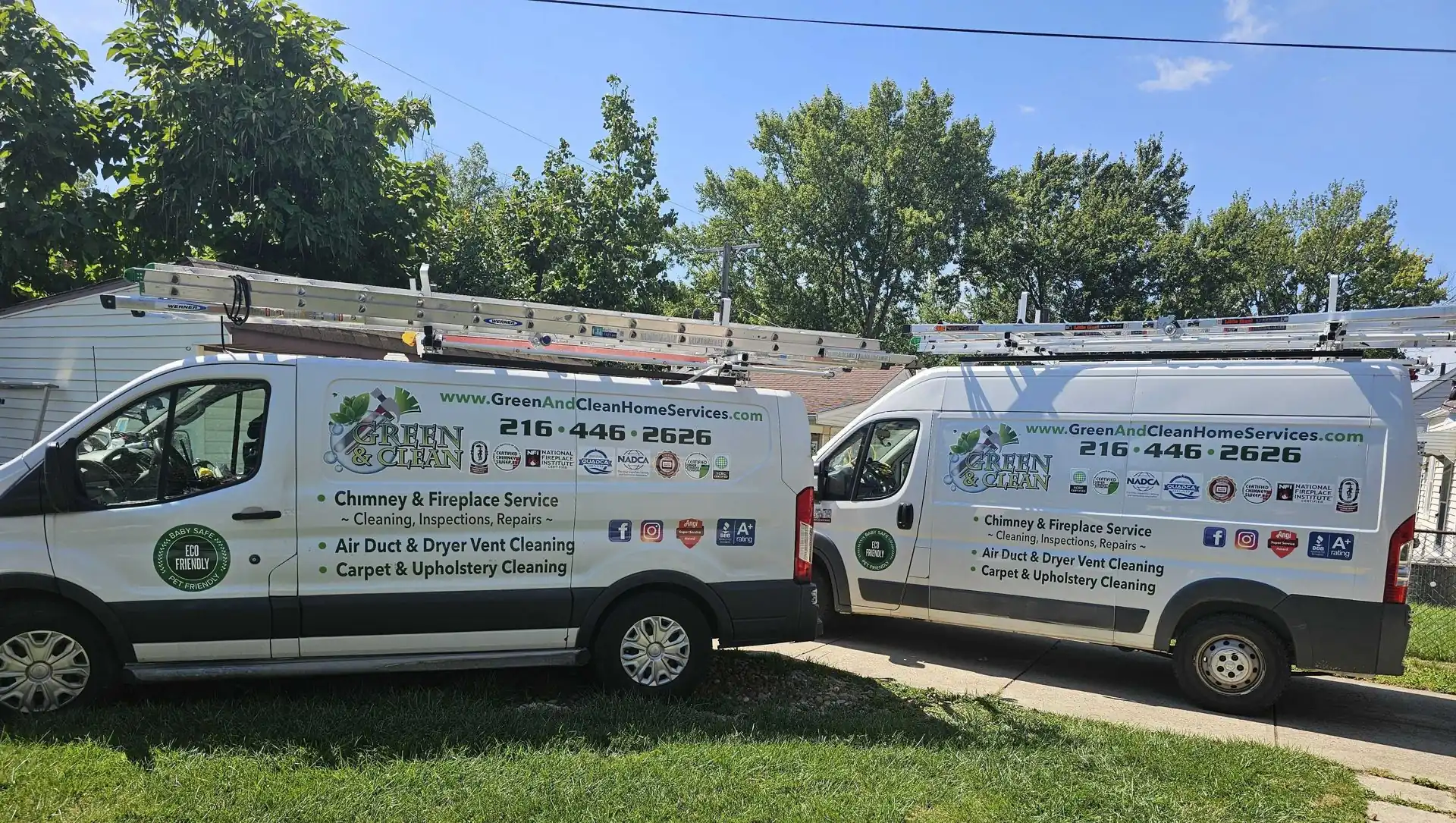
In colder regions like Northeast Ohio, chimney fires are more common because fireplaces are used frequently during winter. Increased usage leads to faster creosote buildup, making regular maintenance even more important. Homes in areas such as Lake, Cuyahoga, and Summit counties rely heavily on fireplaces for warmth, which increases the need for routine chimney care. Local professionals like Green and Clean Home Services provide cleaning and inspection services to help homeowners stay protected.
What to Do If a Chimney Fire Occurs
If you suspect a chimney fire, immediate action is necessary. Close the damper to reduce airflow and evacuate everyone from the home. Call emergency services right away and avoid using water to extinguish the fire, as sudden cooling can damage the chimney. After the fire is controlled, do not use the fireplace until it has been inspected by a professional. Even minor fires can cause hidden structural issues that need to be addressed.
Long Term Importance of Chimney Maintenance
Regular chimney maintenance is essential for long term safety and performance. A well maintained chimney reduces fire risk, improves efficiency, and extends the life of the entire system. Neglecting maintenance can lead to costly repairs, including liner replacement or structural rebuilding. By investing in routine care, homeowners can avoid major expenses and ensure their fireplace remains a safe and enjoyable feature of the home.
Final Thoughts
So, what’s the fire in the chimney called? It is called a chimney fire, and while it is a serious hazard, it is also preventable with proper care. Regular cleaning, annual inspections, and safe burning practices can significantly reduce the risk. Whether you use your fireplace daily or occasionally, staying proactive ensures your home remains safe, comfortable, and protected throughout the year.