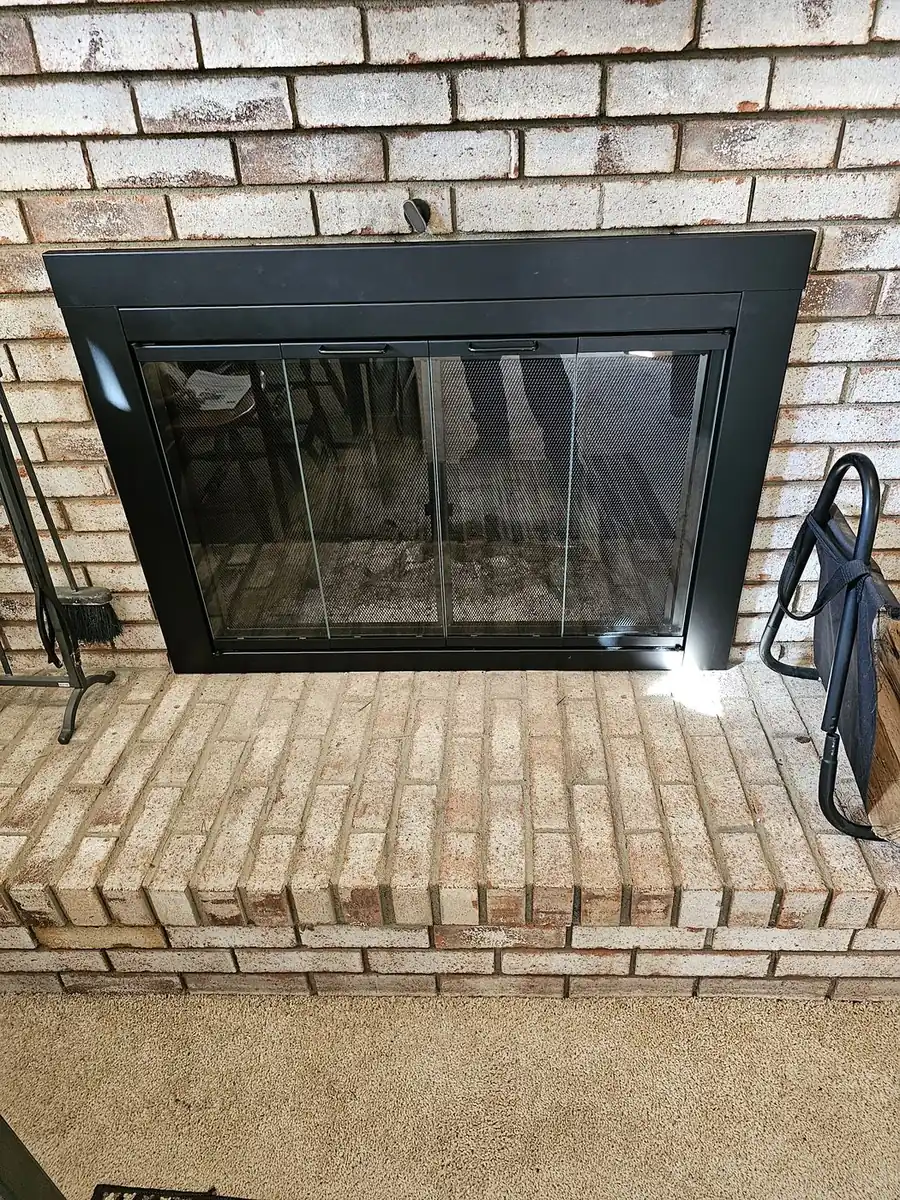
You finally light the fireplace on the first cold night of the season. The flames look great. The glass does not. That milky, frosted haze sitting across the front of your cloudy gas fireplace glass can make a nearly new unit look neglected, and most homeowners assume something has gone wrong inside the firebox.
It hasn’t.
That white film on fireplace glass is a normal byproduct of gas combustion, a cosmetic deposit rather than structural damage, and it lifts away completely, provided you resist the instinct to reach for the ammonia-based bottle of Windex sitting under the kitchen sink. Clean it incorrectly and you can transform a cosmetic annoyance into a permanent, several-hundred-dollar pane replacement. So before you scrub, it helps to understand what that haze actually represents and why it continually reappears.
What Causes the Cloudy White Film on Gas Fireplace Glass?
The cloudy film on gas fireplace glass comes from water vapor and trace minerals released during combustion, which condense on the cool glass at startup and then dry into a chalky, light-colored residue. This is predictable chemistry, not a mechanical malfunction.
Here is what happens inside the firebox. When natural gas or propane burns, the reaction produces heat, carbon dioxide, and a surprising amount of water vapor. At the moment of ignition, the ceramic glass panel is still at room temperature while the burner is already throwing heat. That temperature gap causes the vapor to condense on the inside of the glass, the same way your bathroom mirror fogs after a hot shower.
Then the glass reaches operating temperature and the accumulated moisture evaporates. But it does not leave empty-handed.
Natural gas and propane carry trace amounts of sulfur, along with dissolved minerals like calcium. As the condensation burns off, those compounds stay behind and bond to the surface as a fine white or grayish deposit. Run the fireplace through enough on-and-off cycles across a Northeast Ohio winter, and the layers stack up into the stubborn haze you are looking at now.
Newly installed units introduce one additional complication. During the first several fires, a factory fireplace goes through a curing or burn-off period, where the high-temperature paints, sealants, and lubricants used in manufacturing off-gas and release volatile compounds. Those vapors can fog the glass too. That early film usually clears on its own after the unit has cycled a few times, so a little patience early in the life of the appliance saves you a cleaning you did not need.
Why You Should Never Use Windex on Cloudy Gas Fireplace Glass
Never use an ammonia-based glass cleaner on cloudy gas fireplace glass. Ammonia reacts with the heat and the ceramic surface and etches the glass permanently, and no amount of scrubbing reverses it.
This is the detail most homeowners get wrong, and it is a genuinely expensive mistake.
Standard household glass cleaners, Windex included, rely on ammonia to cut grease on windows and mirrors. Fireplace glass is categorically not ordinary window glass. It is a high-temperature ceramic or pyroceramic panel engineered to survive repeated thermal shock, and when ammonia residue is left on that surface and then heated past several hundred degrees on the next fire, it bakes into the material and clouds it for good. What started as removable mineral film becomes a frosted, foggy panel that no cleaner can restore. At that point the only fix is replacement, and a single ceramic fireplace panel often runs a few hundred dollars plus labor.
The cleaning implements matter as much as the chemistry itself. Paper towels, abrasive sponges, and scouring pads leave micro-scratches across the surface. Those micro-abrasions accomplish more than merely dulling the visibility. They create weak points that compromise a panel built to handle heavy thermal cycling, which is the last thing you want on a barrier standing between an open flame and your living room. Soft, lint-free microfiber is the only material that should ever contact the glass surface.
How Do You Properly Clean Gas Fireplace Glass?
To clean gas fireplace glass safely, wait until the unit is fully cool, shut off the pilot and gas supply, remove the panel per the manufacturer’s instructions, and wipe the interior with an ammonia-free fireplace glass cream and a microfiber cloth. Never clean the glass while the appliance is warm or running.
Specialized cleaning products matter enormously here. Restoring cloudy gas fireplace glass calls for a purpose-made, ammonia-free cleaner, typically a mild abrasive cream formulated to dissolve the sulfur and calcium deposits without degrading the ceramic substrate. A diluted solution of water and white vinegar can manage very light residue, but a dedicated hearth-glass cream remains the safer option once the mineralization has accumulated across multiple heating cycles.
How to Clean Gas Fireplace Glass Without Etching It
Work through it in order, and do not rush the cool-down step:
- Shut everything down. Turn off the pilot light and the gas valve, then let the fireplace sit until the glass is completely cool to the touch, which can take a few hours after a long burn.
- Remove the glass panel carefully. Most sealed units use a latch or bracket system, and the owner’s manual shows the exact release points so you do not crack the panel or disturb the gasket.
- Apply an ammonia-free fireplace glass cleaner to a soft microfiber cloth, never directly onto hot or warm glass, and wipe in slow circles to break down the mineral film.
- Buff with a second, dry microfiber cloth until the surface is clear, then inspect for any cloudiness that will not lift, which usually signals etching that already happened.
- Reseat the panel fully, confirming the gasket sits flush, because a poor seal changes how the unit drafts and burns.
This is where our technicians use eco-friendly, pet-safe, glass-safe compounds that restore the factory clarity without leaving harsh fumes behind in the room. If you have pets or kids and the thought of ammonia residue near the hearth bothers you, that detail is not a small thing.
Not comfortable pulling the panel yourself? That is a reasonable call, and it leads straight to the bigger point.
Why Cloudy Glass Signals It’s Time for Annual Gas Fireplace Maintenance
Heavy film on the glass is rarely an isolated, surface-level problem. If calcium and sulfur are caking the panel, the same combustion byproducts and household dust are almost certainly collecting on the burner ports, the thermopile, and the valve compartment, and that is what turns a cleaning question into a service question.
Consider what the condition of the glass is actually telling you. It is a visible accumulation record of every fire the appliance has run, and a thick deposit indicates numerous combustion cycles without professional attention. Accumulated dust on the burner ports can distort the flame pattern and reduce combustion efficiency. A contaminated thermopile can interrupt the millivolt signal that keeps the pilot lit, causing the flame to drop out unexpectedly. Shifting or misaligned logs can push the flame into the wrong zone and generate soot, which is unburned carbon and a sign the unit is not combusting cleanly.
Because a gas fireplace is a fuel-burning appliance, the buildup that clouds the glass can also interfere with proper venting, and poor venting is exactly how carbon monoxide becomes a danger indoors. The U.S. Consumer Product Safety Commission’s carbon monoxide guidance is direct about it: fuel-burning appliances need regular professional inspection to stay safe. A hazy panel is a cheap early warning. Ignore it and the problems hiding behind it get more expensive and more serious.
A thorough annual gas fireplace maintenance visit from a certified Green & Clean technician covers the whole system, not just the view:
- Safely cleaning the glass with non-etching, glass-rated compounds and reseating the panel to the correct seal.
- Vacuuming pet hair, dust, and debris out of the blower housing and valve compartment, where buildup quietly chokes airflow.
- Inspecting and realigning the ceramic logs to the manufacturer’s layout so the flame runs where it should and stops throwing soot.
- Testing the thermopile, pilot assembly, gas pressure, and safety sensors to confirm the unit lights and holds a flame reliably.
- Checking the venting and terminations for obstructions, nests, or blockage that would trap combustion gases inside the home.
A single appointment resolves the cosmetic complaint and the safety inspection simultaneously. That is the responsible, efficient approach to fireplace ownership.
Gas Fireplace Service Across Northeast Ohio
Cleveland winters are long, and a gas fireplace earns its keep from November through March, which is also when a neglected unit is most likely to leave you cold on the night you need it. Getting ahead of that with a fall or early-winter tune-up is the move we recommend to every homeowner in the region.
A pane of cloudy gas fireplace glass is usually the first visible symptom of an appliance overdue for professional service. Green & Clean has serviced gas fireplaces across Northeast Ohio since 2016, with more than 15,000 homes and businesses handled across Lake, Cuyahoga, Geauga, and the surrounding counties. Our technicians hold NFI and CSIA certifications, the company carries an A+ rating with the Better Business Bureau, and every tech is background-checked before they set foot in your home. We also document the work, so you see the condition of your unit rather than taking our word for it. You can book a full tune-up through our gas fireplace repair and maintenance service, and if the glass is already etched, we will tell you straight whether cleaning or replacement is the honest answer.
Book Your Northeast Ohio Gas Fireplace Tune-Up
Skip the hassle, and the risk, of pulling the panel and guessing at the right cleaner. Schedule a complete, professional gas fireplace maintenance appointment with a certified Green & Clean technician and walk into winter with clear glass and a safe, efficient fireplace.
Call (216) 446-2626, email office@greenandcleanhomeservices.com, or schedule your gas fireplace service online. We serve homeowners throughout Lake, Cuyahoga, Geauga, and the greater Cleveland metro area.