Most homeowners call us asking for “a chimney cleaning” when what they need is an inspection, or the reverse. The two get used interchangeably, and they are not the same service. Here is the chimney sweep vs chimney inspection difference in one line: a chimney sweep removes creosote and soot so your flue does not catch fire, while a chimney inspection looks for structural damage, leaks, and safety hazards inside the system.
One cleans. The other diagnoses.
The Quick Answer: Sweep vs. Inspection Comparison
| Feature | Chimney Sweep | Chimney Inspection (Level 2) |
|---|---|---|
| Primary goal | Remove creosote, soot, and blockages so the flue burns safely | Document the condition of the flue, liner, crown, and masonry and find hazards |
| What happens | Brushes, rods, and HEPA vacuums clear the flue, smoke chamber, and firebox. Debris and animal nests come out. | A camera goes down the flue, a drone covers the exterior and crown, and you get a written report with photos |
| Time required | 45 to 90 minutes for a standard residential flue | 60 to 120 minutes, longer when the report is going to a lender or insurer |
| When it’s required | Annually, or after roughly one cord of wood burned | Home sale or transfer, after a chimney fire or severe weather, or any change of appliance or fuel |
Scan that table and you have your answer. The sections below explain why each service exists, and what the levels actually mean.
What Exactly Is a Chimney Sweep?
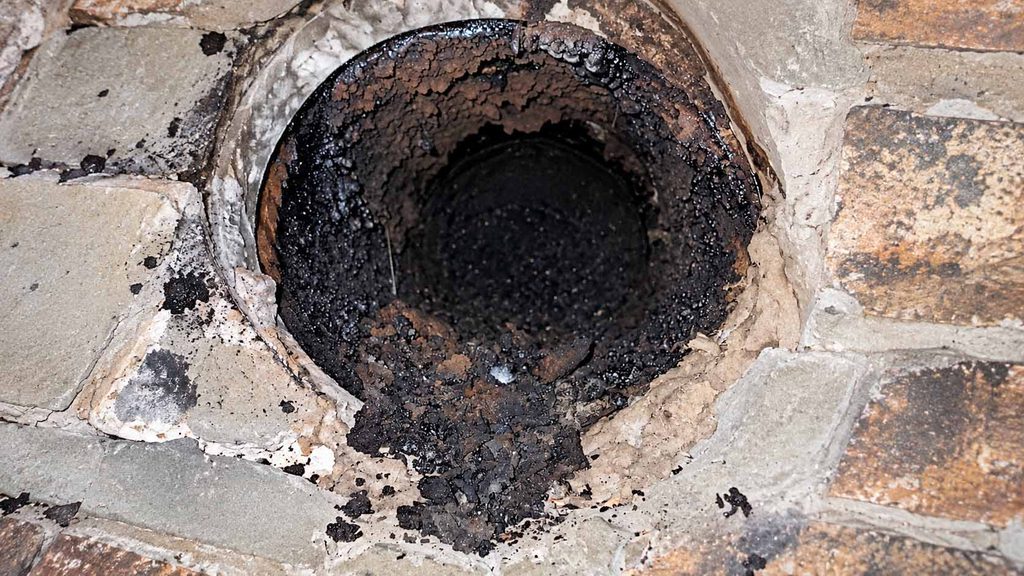
A chimney sweep is the physical removal of creosote, soot, and debris from the flue, smoke chamber, smoke shelf, and firebox. Creosote is the tar-like residue left behind when wood smoke condenses on a cooler flue wall, and it burns at roughly 1,100 degrees Fahrenheit once it ignites. That is the entire reason the trade exists.
Our technicians work the flue with rotary rods and brushes sized to your specific liner, then capture the fallout with HEPA filtration vacuums running at the firebox. Your living room stays clean. No soot on the carpet, no gray film on the mantel, which is the part most homeowners are quietly worried about when they book.
Glazed creosote changes the job. When the deposit has hardened into a shiny black layer, standard brushing will not touch it, and the technician moves to a chemical treatment or rotary chain system instead. Our guide to removing creosote buildup walks through the three stages and why stage three is the one that keeps chimney professionals up at night.
When is a sweep actually due? The industry benchmark is one eighth of an inch of creosote accumulation on the flue wall, which a typical Northeast Ohio household hits after burning roughly one cord of seasoned hardwood. Open-hearth burners who use the fireplace on weekends through a long winter often reach that threshold in a single season. Gas appliance owners frequently assume they are exempt, and they are not, since gas exhaust carries moisture and acidic byproducts that eat clay liners from the inside even though there is no visible soot.
Here is the bonus most people do not realize they are getting. A standard sweep from Green and Clean includes a Level 1 visual inspection at no extra charge, because no competent sweep cleans a flue without looking at what they just exposed. If the technician spots a cracked clay tile or a failing crown, you will hear about it that day.
What Exactly Is a Chimney Inspection (And Why “Levels” Matter)?
A chimney inspection is a graded assessment of the system’s condition, standardized into three levels under NFPA 211 and used by every certified sweep in the country. The level is not an upsell tier. It is determined by what triggered the visit.
The Chimney Safety Institute of America publishes the full definition of all three levels, and the short version looks like this:
- Level 1 is the basic visual check of readily accessible portions: the firebox, the damper, the visible exterior, and what can be seen up the flue from below. It applies when nothing has changed and you are using the appliance the same way you did last year. It comes with your annual sweep.
- Level 2 is the standalone service most homeowners actually need. It adds video scanning of the full flue liner, accessible attic and crawlspace runs, and exterior work on the crown and cap. We fly a drone for the exterior portion, which means the crown, cap, and upper masonry get documented without a technician guessing from the ground or putting a ladder on wet slate.
- Level 3 involves removing permanent parts of the building or chimney structure, such as a chase cover or a section of wall, to reach a hazard the first two levels could not confirm. It is rare, it is invasive, and most homeowners will never need one.
The deliverable is what separates a Level 2 from a Level 1. You get a written report with camera stills, which is the document a real estate attorney, an underwriter, or a buyer’s agent will actually accept. A verbal “it looked fine to me” satisfies nobody in a closing.
Three failures show up again and again on camera in this region, and none of them are visible from your living room: shifted or cracked clay flue tiles in homes built before 1980, crown deterioration where water has worked into hairline cracks and frozen, and flashing separation at the roof line that homeowners have usually been treating as a roof leak for two or three seasons. The camera is what turns a guess into a repair scope and a number.
The Decision Line: Which Service Do You Need Right Now?
Find your situation below.
- “I am buying or selling a home.” You need a Level 2 inspection. A standard sweep does not satisfy real estate disclosure or insurance requirements, because there is no documented report of the liner’s condition behind it. General home inspectors almost never scope a flue, so the chimney is routinely the one system in the house nobody looked at before closing.
- “I just had a chimney fire, a roof fire, or a severe weather event.” You need a Level 2 inspection. Lake-effect freeze-thaw cycles across Lake and Geauga counties crack crowns and open mortar joints every winter, and a flue fire can spall the liner from the inside without leaving a single mark you can see from the hearth. If you are not sure whether what you smelled was a flue fire, the warning signs of a chimney fire are worth two minutes of your time.
- “I am installing a new gas insert, wood stove, or changing my fuel type.” You need a Level 2 inspection. Switching from wood to gas changes the exhaust temperature and moisture content moving through the flue, and a liner sized correctly for one appliance is frequently oversized or unlined for the next. Code requires the system to be verified for the appliance actually connected to it.
- “I have lived here for years and it is time for annual fall maintenance.” You need a chimney sweep, which includes that Level 1 safety check. This is the majority of our October and November calendar across Cleveland, Mentor, Solon, and Chardon.
Still deciding between the two? Book the sweep. If the technician finds something on the Level 1 check that warrants a camera, we will tell you on site rather than selling you the higher service in advance.
Want a certified technician to look at yours? Estimates are free across Northeast Ohio. Request yours here or call (216) 446-2626.
Can You Get a Sweep and an Inspection in the Same Visit?
Yes, and in one specific order. The flue has to be clean before a camera can tell you anything useful, because a quarter inch of soot hides exactly the cracks and gaps a Level 2 is meant to find.
So when both services are booked together, the technician sweeps first and scopes second. Sellers under a closing deadline book it this way almost every time, and it is the right call: you end the visit with a clean system and a documented report, instead of paying for a camera run that photographed soot.
The reverse order wastes your money. Any company that offers to scope a dirty flue and call it a Level 2 is selling you a report nobody should rely on.
What Do They Cost?
A standard chimney sweep runs roughly $150 to $375 nationally, and a Level 2 chimney inspection generally falls between $250 and $600, according to 2026 cost data compiled by HomeGuide. Level 3 work, because it means opening up the structure, climbs into the $900 to $5,000 range. Our own Northeast Ohio pricing sits inside those bands, and we quote the exact number before a technician is dispatched.
Why does a Level 2 cost more than twice a Level 1? You are paying for equipment and documentation, not labor hours. The flue camera, the drone, and the time it takes to write up a photo-supported report that holds up in a real estate transaction are the cost drivers. A Level 1 is a trained set of eyes. A Level 2 is a trained set of eyes plus a record.
Three things move a quote up: a flue that has not been swept in more than three years, a chimney over two stories, and glazed creosote that needs chemical treatment before brushing. For a fuller breakdown of what changes the number, see our post on what a chimney inspection costs.
One honest caveat. If a company quotes you $79 for a sweep over the phone without asking what you burn or how tall the chimney is, that price is a door opener, and the real invoice arrives after the technician is already in your living room.
Ready to Book?
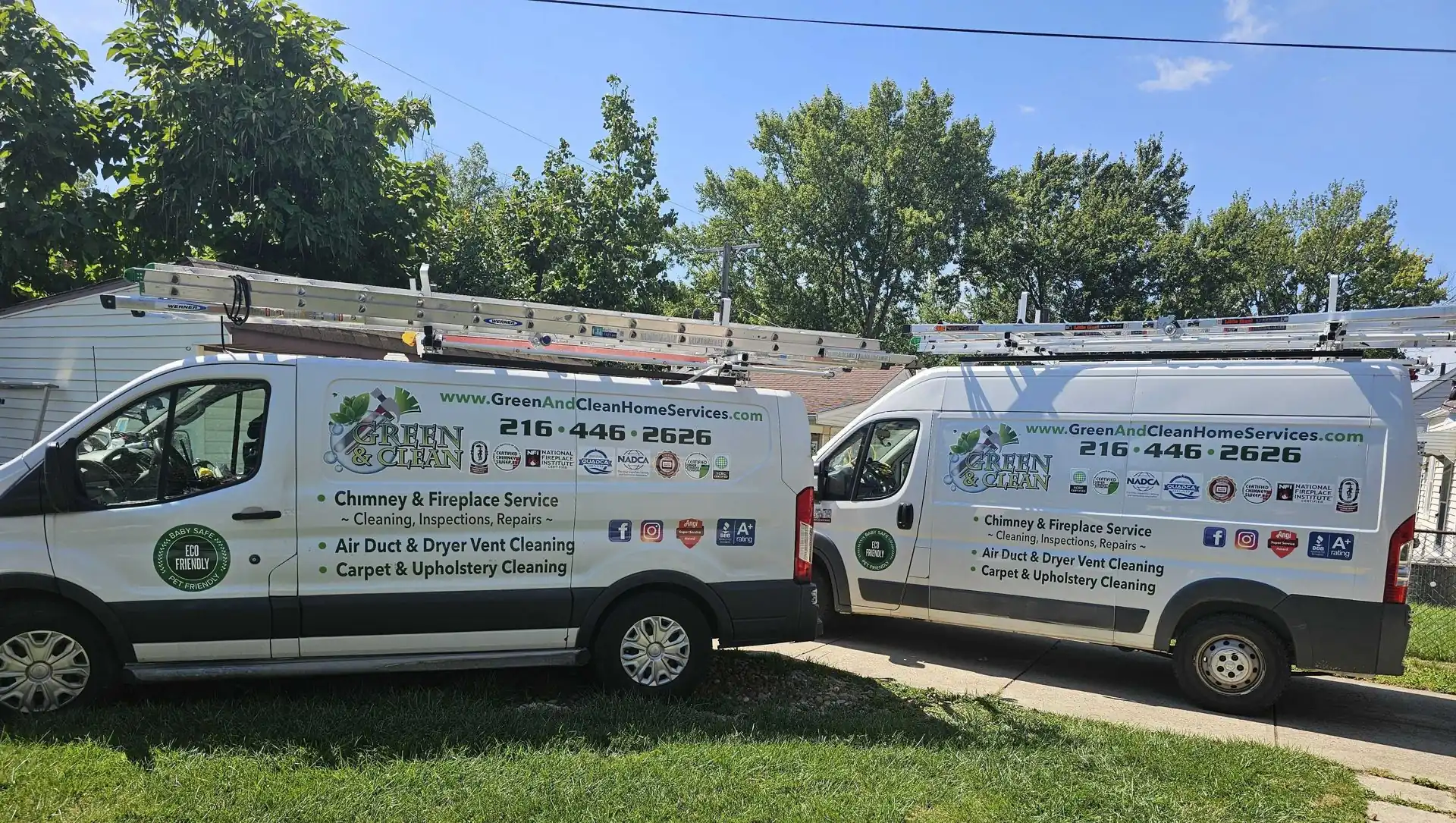
Green and Clean Home Services has swept and inspected chimneys across Lake, Cuyahoga, Geauga, Summit, Portage, Medina, and Lorain counties since 2016, with CSIA Certified Chimney Sweeps and NCSG Certified Chimney Professionals on staff. Pick the service that matches your situation:
If you just need your annual cleaning before the first cold snap, book a chimney sweep.
If you are buying or selling a home, changing appliances, or had a fire or storm event, book a Level 2 chimney inspection.
Not sure which one fits? Call (216) 446-2626 and describe what you are seeing. We will tell you which service you need, including when the answer is that you do not need either one yet.